
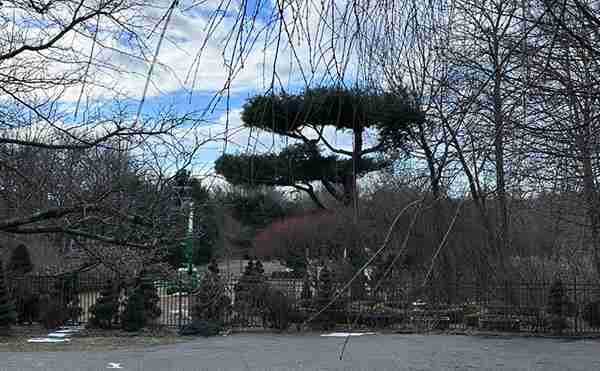
Shaping White Pine to Bonsai-Inspired Form
We did some unique pruning for this larger White Pine to “Bonsai” transformation! We also did various other prunes or reductions for this client in Litchfield today.
As tree professionals, we occasionally hear from homeowners eager to incorporate the aesthetic of bonsai into their landscapes using native trees. One of the most fascinating candidates for this transformation is the Eastern White Pine (Pinus strobus). While traditionally known for their towering presence and fast growth, with careful pruning and training, white pines can take on the sculptural elegance of a bonsai while maintaining their vigor in the landscape.
Understanding White Pine Growth Habits
Before shaping a white pine, it’s crucial to understand how it grows. Unlike many deciduous trees, white pines have a distinct growth pattern, with whorled branches radiating outward from a central leader each year. They are relatively fast growers, sometimes adding more than a foot of new growth annually. Their needles are soft and flexible and grow in clusters of five, which can lend a delicate, feathery aesthetic when properly pruned.
Selecting the Right Tree
If you’re shaping a white pine in a garden setting, start with a young tree, preferably one with a well-formed central leader and strong lower branches. Working with an older tree will require more patience, as reshaping mature branches takes time.
Shaping Techniques
1. Structural Pruning
- To create a bonsai-inspired form, identify the primary trunk and define a shape.
- Remove any unwanted or awkwardly placed branches early on.
- Aim to create a layered, open structure by selectively pruning to encourage horizontal rather than vertical growth.
2. Candle Pinching
- White pines produce new growth in spring, known as “candles.”
- Pinching back these candles before they fully elongate, you slow down the tree’s overall growth while encouraging denser, more compact foliage.
3. Directional Wiring
- While white pines are not as flexible as traditional bonsai species, we can train young branches with wire.
- Wrap the wire carefully around the branch and bend it slowly to create a natural, windswept, or cascading effect.
- Avoid leaving wire on too long, as it can bite into the bark and cause damage.
4. Encouraging Aged Character
- To mimic the aged look of traditional bonsai, selectively remove needles in late summer to expose the tree’s structure.
- Consider lightly carving deadwood areas to create the illusion of natural weathering.
Maintenance and Long-Term Care
Shaping a white pine into a bonsai-inspired form is not a one-time task but an ongoing process. Annual pruning, occasional wiring, and strategic candle pinching will help refine the form over time. Additionally, monitor for pests like pine weevils or needle cast diseases, as maintaining good airflow and proper health is essential for the tree’s longevity.
While actual bonsai trees are traditionally grown in containers and shaped over decades, applying bonsai techniques to white pines in the landscape can yield stunning, natural sculptures that add an artistic touch to any garden. With patience and careful pruning, these majestic trees can be transformed into living works of art, offering a unique fusion of nature and craftsmanship.
Learn more about our Tree Care services.