
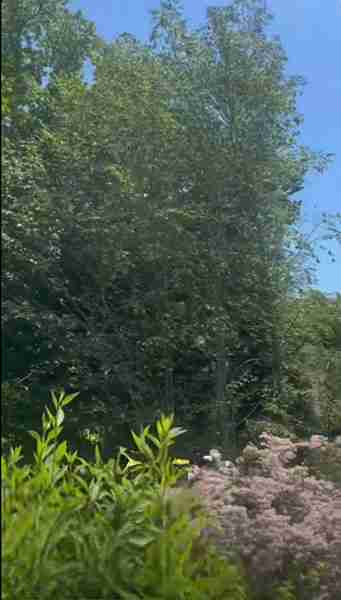
Beech Leaf Disease and Beech Bark Disease
American beech trees have long been prized throughout Connecticut for their smooth gray bark, dense shade, and beautiful fall foliage. Unfortunately, these iconic trees are now facing two serious threats: Beech Leaf Disease (BLD) and Beech Bark Disease (BBD). While these are two separate diseases, many trees are now affected by both, creating a significant challenge for homeowners and property managers.
What Is Beech Leaf Disease?
Beech Leaf Disease is a relatively new disease that was first identified in Ohio in 2012 before spreading rapidly throughout the Northeast. It was confirmed in Connecticut in 2019 and has since become widespread. Researchers have determined that the disease is associated with a microscopic nematode (roundworm) that invades developing buds and leaves, disrupting normal growth.
The earliest sign is dark banding between the veins of newly emerged leaves in spring. As the disease progresses, leaves become thickened, curled, leathery, and undersized. Over several growing seasons, affected trees experience thinning canopies, reduced vigor, premature leaf drop, branch dieback, and eventually death. Young trees often decline much faster than mature specimens.
Understanding Beech Bark Disease
Beech Bark Disease has been present in North America for more than a century. Unlike Beech Leaf Disease, it begins when an invasive beech scale insect feeds on the bark, creating tiny wounds that allow fungi to enter the tree. Those fungal infections produce cankers that gradually kill the bark and restrict the tree’s ability to move water and nutrients.
Symptoms include white, woolly patches of scale insects on the bark, rough or cracked bark, cankers, branch dieback, and declining tree health. Severe infections can weaken or kill mature beech trees over time.
Managing Trees Infected with Beech Leaf Disease
Unfortunately, there is currently no cure that eliminates either disease. However, early intervention can help preserve valuable landscape trees.
Our certified arborists can inspect infected trees to evaluate their overall health and structural stability. In some cases, specialized trunk injections have shown promise in reducing symptoms of Beech Leaf Disease when applied before severe decline occurs. Maintaining proper watering during drought, applying mulch correctly, avoiding root damage, and monitoring for hazardous dead branches can also help reduce additional stress on infected trees. Trees that have become structurally unsafe or are in advanced decline may ultimately require removal to protect nearby people and property.
Protect Your Beech Trees with Professional Care
If you have beech trees on your property, don’t wait until major decline becomes obvious. Early diagnosis offers the best opportunity to extend the life of valuable trees and identify potential safety concerns before they become hazardous.
Our certified arborists can evaluate the health of your beech trees and recommend the most appropriate management plan. They can also help you determine whether treatment, monitoring, pruning, or removal is the best course of action. With these diseases continuing to spread across Connecticut, proactive tree care has never been more important.